admin
admin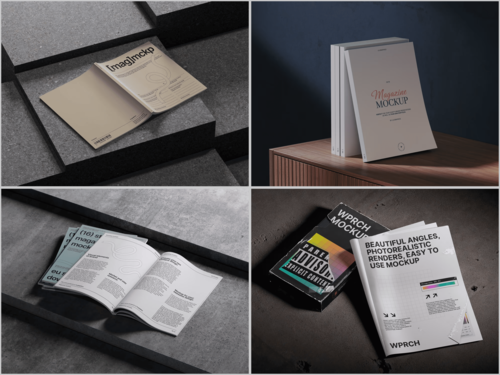
The way we present design work has changed dramatically. Clients no longer squint at flat PDF exports — they want to feel the design before it goes to print. That’s where magazine mockups have quietly become one of the most powerful tools in a designer’s arsenal. In 2026, the game has evolved, and knowing which trends matter can be the difference between a pitch that lands and one that gets filed away forever.
Why Mockups Have Become Non-Negotiable
Not long ago, showing a magazine layout meant printing a prototype or hoping your client had enough imagination. Today, photorealistic mockups do the heavy lifting — and the standards have risen sharply. Brands expect presentations that mirror real-world environments: a magazine resting on a marble café table, fanned open under soft studio lighting, or stacked alongside morning coffee.
This shift isn’t just aesthetic. It’s psychological. A well-staged Magazine mockup creates emotional buy-in. Clients respond to what they can visualize, and designers who master presentation craft win more approvals with fewer revision rounds.
The Dominant Trends Shaping 2026
Tactile realism over sterile perfection The “floating object on white background” era is fading. This year, designers are gravitating toward mockups that include environmental storytelling — worn wooden surfaces, linen textures, natural shadows with soft falloff. The goal is warmth, not clinical precision.
Multi-angle compositions Single-view mockups feel limiting now. The trend is layered scene-building: cover shot, open spread, and detail close-up presented together as a storytelling sequence. This approach mirrors how editorial photographers shoot real issues.
Dark mode and editorial minimalism Monochromatic palettes — deep charcoal backgrounds, single accent colors — have surged in popularity. They let the magazine design breathe without competing visual noise.
Sustainable and handcrafted aesthetics Designers working with eco-conscious brands are reaching for mockups featuring recycled-looking paper textures, matte finishes, and natural light — communicating brand values before a single word is read.
Real-World Applications: Where Mockups Actually Earn Their Value
Theory is one thing. Here’s where magazine mockups genuinely move the needle in practice:
- Pitch decks for editorial clients: Art directors presenting to publishing houses use mockups to simulate how a redesigned masthead or cover concept will look at newsstand scale. It replaces printed prototypes entirely.
- Social media content creation: Marketing teams build entire Instagram or LinkedIn content calendars around styled mockup photography — featuring new issues, seasonal editions, or brand collaborations — without organizing a physical shoot.
- Portfolio presentation: Freelance designers drop their layout work into realistic scenes to demonstrate commercial-readiness. A flat InDesign file doesn’t impress; the same layout inside a magazine lying open on a studio desk absolutely does.
- Brand licensing and press kits: Companies launching branded publications or internal magazines use mockups in press materials and investor decks to communicate credibility before the first issue ships.
Magazine Mockups on ls.graphics
ls.graphics has built a well-deserved reputation as a destination for premium mockup resources. Their magazine mockup collection stands out for ultra-realistic rendering that genuinely mimics print materials — paper grain, ink absorption, subtle page curl. Each pack includes organized, clearly labeled layers, making it easy to swap artwork without confusion.
The variety is genuinely impressive: multiple angles, lighting conditions, and color styles accommodate everything from luxury editorial to independent zine aesthetics. Stylish minimalistic compositions keep the focus on your design, not the scene. The Edit Online feature lets you apply your artwork directly in the browser — no Photoshop required. And a generous selection of free scenes means you can test the quality before committing.
Conclusion
Magazine mockups in 2026 aren’t decorative extras — they’re a core part of how design communication works. The trends point toward richer environments, smarter scene-building, and presentation that respects the intelligence of the audience. Whether you’re pitching a rebrand, building a portfolio, or launching a publication, the right mockup turns a good design into an undeniable one. For resources that genuinely deliver on quality, ls.graphics remains one of the most reliable places to start.